Why Learning & Development Must Evolve in the Age of AI
L&D is shifting from managing courses to building capability. Why activity metrics no longer cut it — and how to move from Learning Management to Capability Intelligence.


From Learning Management to Capability Intelligence — a Kampster white paper.
Executive Summary
The Learning and Development function is experiencing its biggest transformation since the emergence of Learning Management Systems (LMS). For years, L&D teams focused on content creation, training delivery, compliance tracking, and course completion. Today, those activities are no longer enough.
Artificial Intelligence, rapid technological change, workforce transformation, and increasing skills shortages are forcing organizations to rethink the role of Learning and Development. Business leaders are no longer asking how many employees completed training, how many courses were delivered, or how many learning hours were consumed.
Instead, they are asking a sharper set of questions:
- What capabilities do we have?
- What capabilities are missing?
- Are our employees prepared for AI?
- How quickly can we develop critical skills?
- How do we measure workforce readiness?
This shift marks the transition from Learning Management to Capability Intelligence. Kampster was built to support this transformation.
The Learning and Development Challenge
Most organizations possess enormous amounts of knowledge — procedures, documentation, presentations, best practices, training materials, and expert know-how. Yet many L&D teams struggle with the same problem: the knowledge exists, but the capability does not.
Valuable expertise often remains trapped inside documents, departments, and individuals. Transforming that knowledge into scalable learning experiences requires significant time and resources. At the same time, the pace of change continues to accelerate. AI is reshaping jobs, new technologies are emerging faster than traditional training programs can adapt, and skills become outdated more quickly than ever before. As a result, L&D leaders are increasingly expected to become strategic contributors to business transformation.
The Shift From Courses to Capabilities
Historically, L&D success was measured through activity — completed courses, attendance, training hours, and certifications. These metrics answer one question: did learning happen? They do not answer a more important one: did capability improve?
Modern organizations increasingly need visibility into workforce capability rather than learning activity.
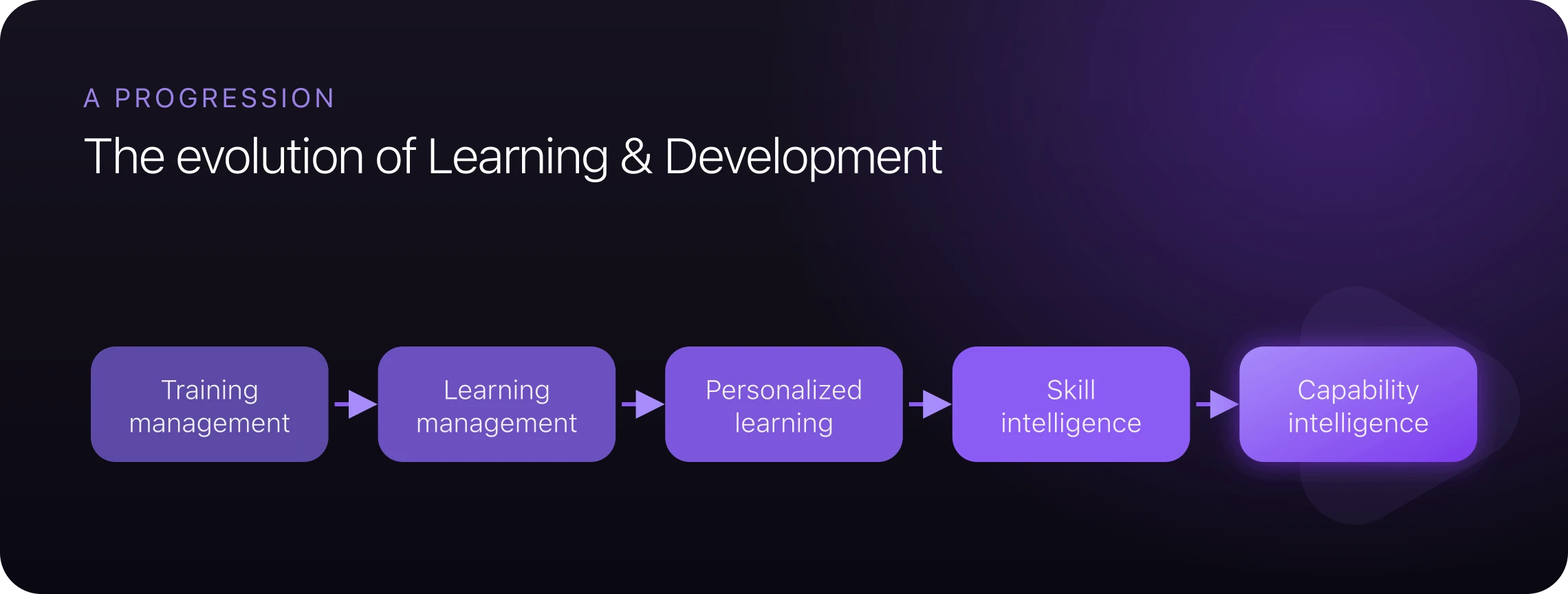
The future of L&D lies not in managing content, but in understanding and developing organizational capability.
The future of L&D lies not in managing content, but in understanding and developing organizational capability.
Knowledge Transformation at Scale
One of the biggest challenges facing L&D teams is content creation. Organizations possess thousands of pages of documentation but often lack the resources to convert that knowledge into structured learning experiences.
Kampster addresses this challenge through AI-powered knowledge transformation. Existing materials — documents, presentations, procedures, and knowledge bases — can be converted into interactive courses, assessments, learning journeys, and personalized development programs. This dramatically reduces the time required to create learning content while increasing scalability across the organization.
Personalized Learning for a Diverse Workforce
One of the greatest limitations of traditional Learning Management Systems is that they treat all learners equally. The reality is very different. Within the same organization, employees possess different levels of knowledge, roles require different competencies, teams face different challenges, and individuals have different career goals. A single learning pathway cannot effectively serve everyone.
Kampster enables personalized learning experiences that adapt to existing knowledge, skill levels, business context, career objectives, and organizational priorities. The result is more relevant learning and more efficient capability development.
The Rise of Skill Intelligence
Perhaps the most significant transformation occurring in Learning and Development is the shift toward Skill Intelligence. Organizations increasingly recognize that skills are becoming the primary currency of workforce competitiveness.
The challenge is that many organizations do not know what skills they possess, what skills they lack, where capability gaps exist, or how skills evolve over time. Traditional learning systems provide limited visibility into these questions. Kampster introduces a different approach: instead of measuring learning activity, it focuses on measuring capability.
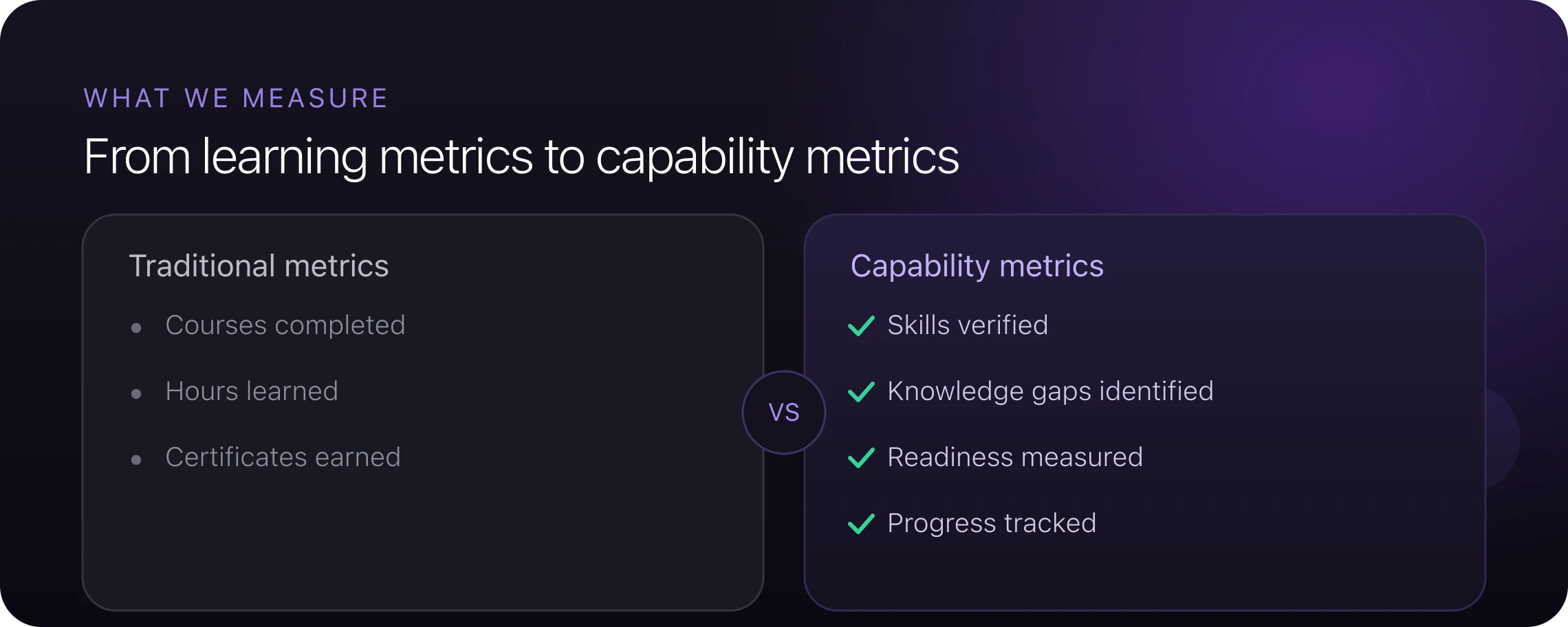
This shift enables L&D leaders to make decisions based on workforce capability rather than assumptions.
Adaptive Assessment and Capability Verification
One of the most important questions facing modern organizations is simple: what do our people actually know? Many organizations assume capability based on job titles, years of experience, or completed training. However, these indicators often fail to reflect actual competence.
Kampster uses adaptive assessment methodologies to evaluate knowledge, competencies, readiness, and development potential. This provides a more accurate picture of workforce capability and helps prioritize development investments.
Workforce Readiness in the AI Era
Artificial Intelligence is creating a new challenge for L&D. Organizations are investing heavily in AI technologies, yet technology adoption often fails because people are not prepared to use the tools effectively. As a result, L&D leaders are increasingly responsible for workforce readiness.
The path runs Awareness → Learning → Skills → Capability → Business impact. Kampster supports this journey by helping organizations assess readiness, identify capability gaps, deliver personalized development, verify progress, and measure outcomes.
Solving the Engagement Problem
One of the most persistent challenges in Learning and Development is learner engagement. Employees often complete training programs but fail to retain knowledge or continue learning afterward. The issue is rarely access to content — it is consistency.
Kampster addresses this through its Micro-Habit Learning Framework. Rather than relying solely on motivation, the platform encourages sustainable learning behaviors through small, repeatable actions.
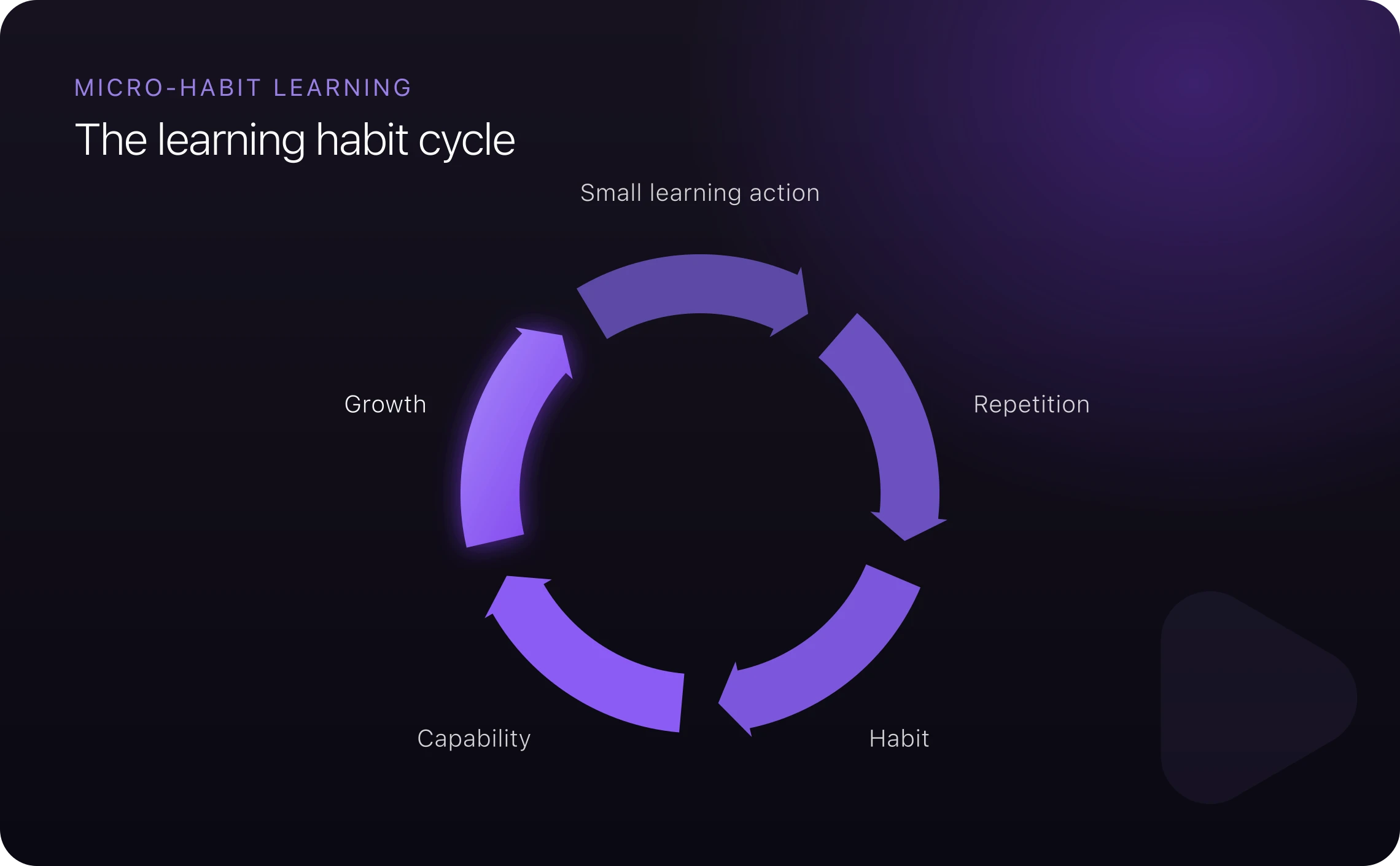
Small actions, compounded — tiny repeated steps build durable capability over time.
This approach supports continuous learning rather than isolated training events.
Measuring Learning ROI
One of the most difficult responsibilities for L&D leaders is demonstrating business impact. Executives increasingly expect evidence that learning investments produce measurable outcomes.
Kampster helps organizations connect learning activities with capability development by providing visibility into skill progression, readiness levels, capability growth, and learning effectiveness. This allows L&D teams to move from reporting activity to reporting impact.
Supporting Business Transformation
Organizations implementing AI, automation, ERP systems, CRM platforms, and digital transformation initiatives often encounter the same obstacle: technology changes faster than people.
Kampster supports transformation initiatives by helping organizations assess readiness, prepare employees, support adoption, verify competencies, and sustain capability growth. This positions Learning and Development as a strategic enabler of transformation rather than a support function.
The Kampster Perspective
The future of Learning and Development will be defined by a shift from content management to capability development. The most successful L&D leaders will not be those who deliver the most courses. They will be those who can answer three critical questions: What capabilities do we have? What capabilities do we need? How quickly can we close the gap?
The organizations that answer these questions effectively will gain a significant competitive advantage.
Conclusion
Learning and Development is entering a new era. The focus is shifting from courses to capabilities, from training activity to workforce readiness, and from content delivery to measurable impact. Kampster was built to support this transformation.
By combining AI-powered knowledge transformation, personalized learning, skill intelligence, adaptive assessment, capability verification, and continuous development, Kampster helps organizations move beyond traditional Learning Management Systems toward a future centered on Capability Intelligence.
Because in the age of AI, the most important asset is not information. It is the ability of people to continuously develop, adapt, and perform.