Why Consulting Firms and Technology Integrators Need a New Model for the AI Era
Technology now changes faster than human capability. The future of consulting and implementation belongs to firms that turn strategy into measurable capability.


Why the future of consulting and implementation is capability transformation — not more recommendations.
Executive summary
For decades, consulting firms have operated using a relatively simple model: assess the situation, identify gaps, develop recommendations, deliver a strategy, then move to the next client. This model created enormous value in a world where information was scarce and expertise was difficult to access.
Today, organizations face a different challenge. The problem is no longer knowing what should be done. The problem is ensuring that people can actually do it. Across industries, companies are investing heavily in digital transformation, artificial intelligence, automation, data analytics, and new operating models. Yet many transformation initiatives fail to deliver their expected results.
The reason is surprisingly consistent: technology changes faster than human capability. Organizations do not struggle because they lack strategies. They struggle because they lack the skills, behaviors, and adoption necessary to execute those strategies.
This shift is creating a new opportunity for consulting firms and implementation partners. The future belongs to organizations capable of combining strategic insight, workforce diagnostics, capability development, and measurable transformation into a single offering. This paper introduces the Capability Transformation Ecosystem Model — a new approach that combines consulting expertise, technology implementation, and continuous workforce development.
The transformation gap
Organizations around the world spend billions of dollars every year on digital transformation, AI adoption, ERP and CRM implementation, process optimization, change management, and workforce development. Despite these investments, transformation outcomes remain inconsistent.
Research across industries repeatedly identifies the same challenge. Technology implementation is often successful. Human adoption is not. New systems are deployed, processes are redesigned, and strategies are approved — yet employees continue working as they did before. The result is a growing gap between technological capability and organizational capability.
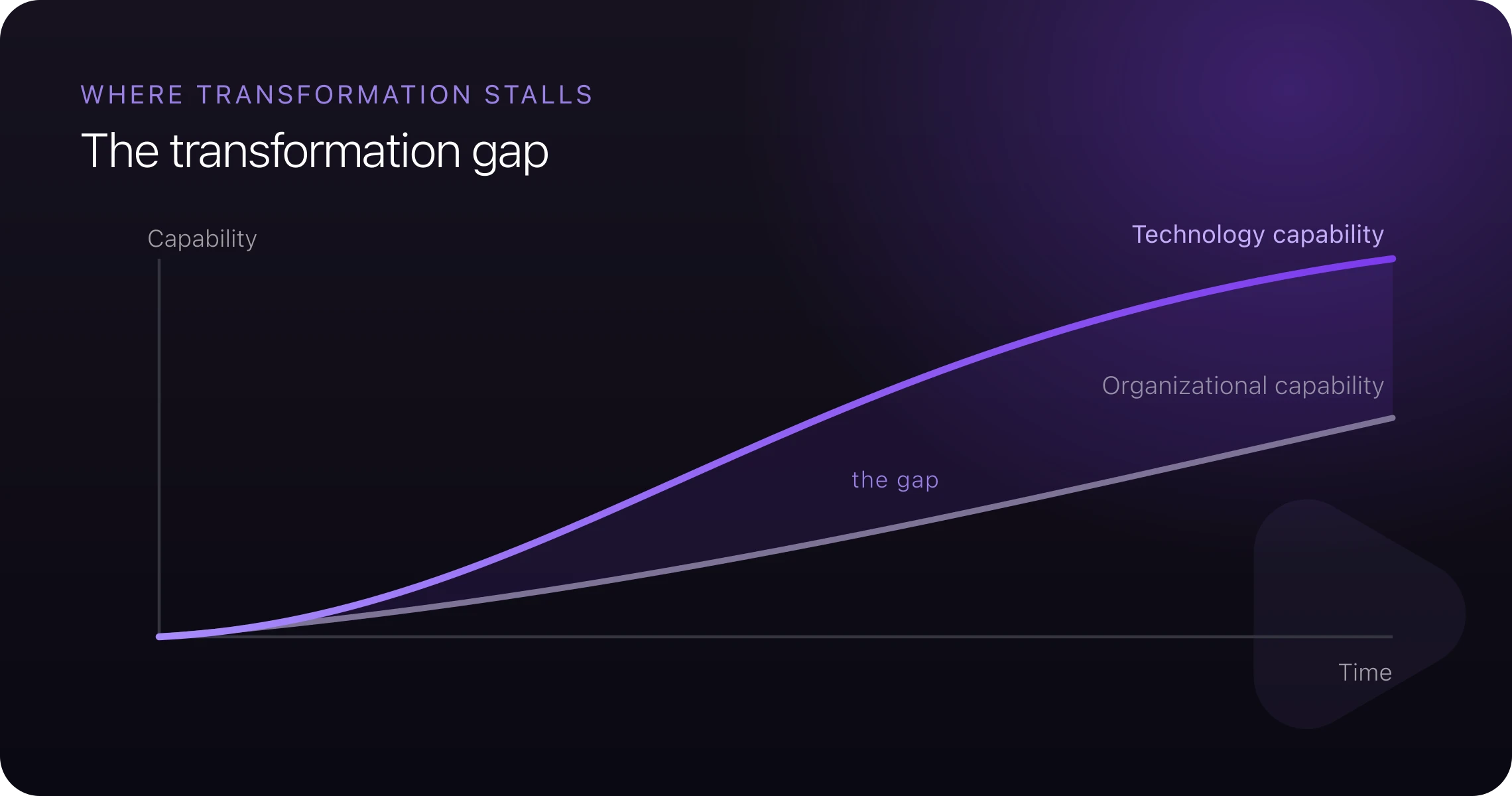
Technology changes faster than human capability. Closing the gap — not buying more tech — is the work.
The challenge facing consulting firms is no longer helping clients choose the right technology. The challenge is helping clients develop the capabilities required to use that technology successfully.
Why traditional consulting is changing
Historically, consulting firms generated value primarily through expertise and recommendations. Clients hired consultants because they needed answers. Today, answers are increasingly available through AI systems, knowledge platforms, industry reports, and digital resources.
This does not reduce the value of consulting. It changes where value is created. Future consulting firms will compete less on information and more on implementation. Clients increasingly ask:
- How do we measure readiness?
- How do we identify capability gaps?
- How do we accelerate adoption?
- How do we verify results?
- How do we sustain change?
These questions cannot be solved through PowerPoint presentations alone. They require continuous engagement with people.
The emergence of capability transformation
A new category is beginning to emerge. Instead of delivering recommendations, firms increasingly help clients build capability. This model follows a continuous, repeatable cycle:
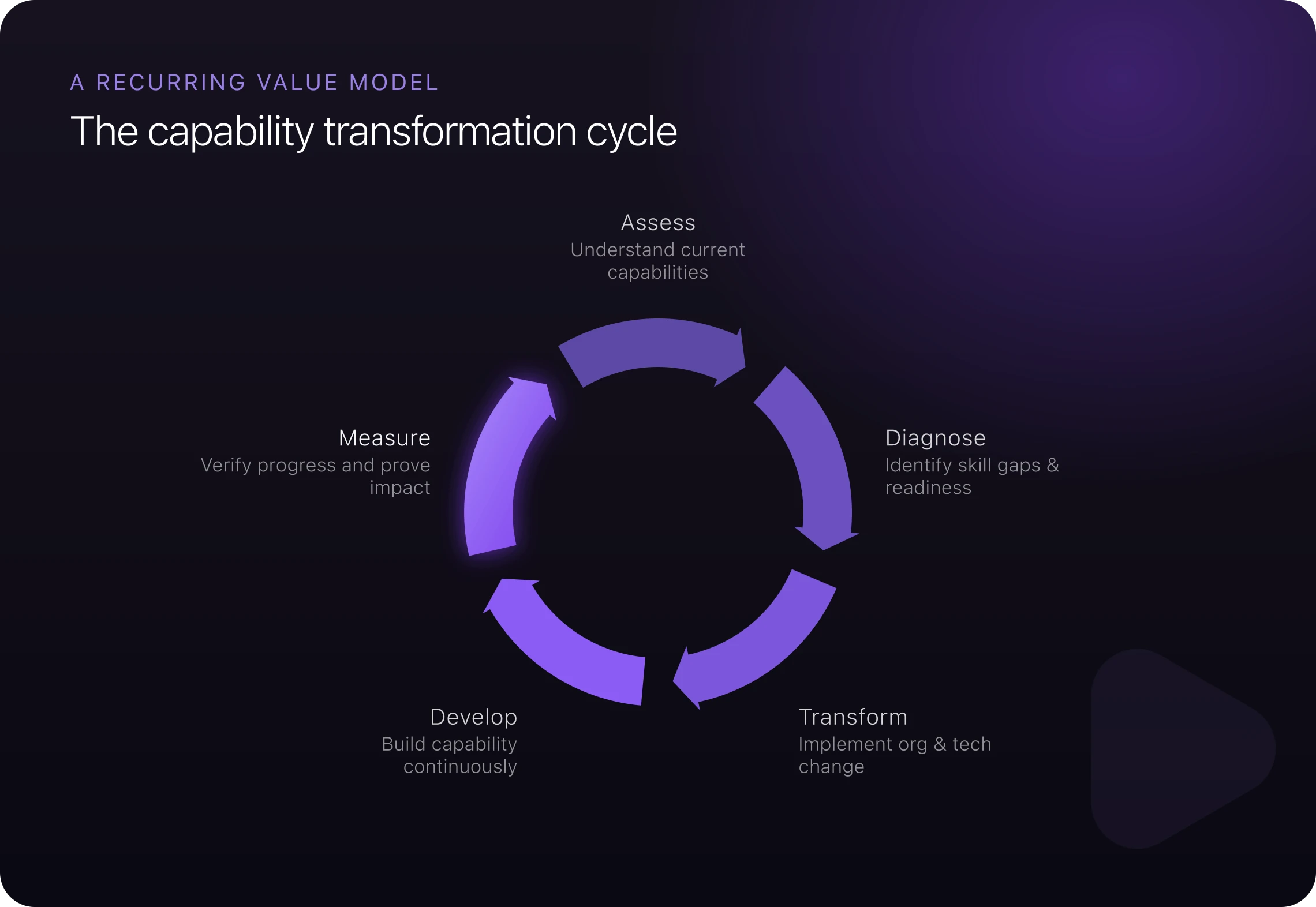
Not a one-time project — a recurring model that keeps creating value.
This creates a recurring value model instead of a one-time project model.
The consulting opportunity
For consulting firms, this evolution creates several opportunities.
Expand service revenue
Capability assessment creates new consulting entry points. Instead of beginning with assumptions, consultants begin with data.
Improve project success rates
Organizations can identify readiness challenges before transformation initiatives begin.
Create long-term client relationships
Capability development continues long after the initial strategy project has ended.
Generate measurable outcomes
Consulting recommendations can be directly linked to workforce capability improvements, creating stronger ROI narratives for clients.
The technology integrator opportunity
The same transformation is occurring among implementation partners. Technology implementation firms frequently face a common challenge: the solution works, but users do not adopt it.
Whether implementing AI solutions, ERP systems, CRM platforms, automation tools, or digital workplace technologies, the success of the project ultimately depends on people. Implementation firms increasingly need mechanisms to assess readiness, train users, support adoption, verify competency, and sustain change. Capability development is becoming a critical component of implementation success.
The adoption chain is unforgiving: Technology implementation → User adoption → Capability → Business impact. Without adoption, transformation stalls. Without capability, technology remains underutilized.
Introducing the Capability Transformation Ecosystem
Kampster was built around a simple belief: transformation succeeds when technology, expertise, and human development work together. Rather than competing with consulting firms or implementation partners, Kampster is designed to strengthen their offerings. The platform enables partners to assess workforce readiness, identify skill gaps, generate organizational insights, support transformation programs, deliver personalized upskilling, and verify capability development.
This creates a new ecosystem model.
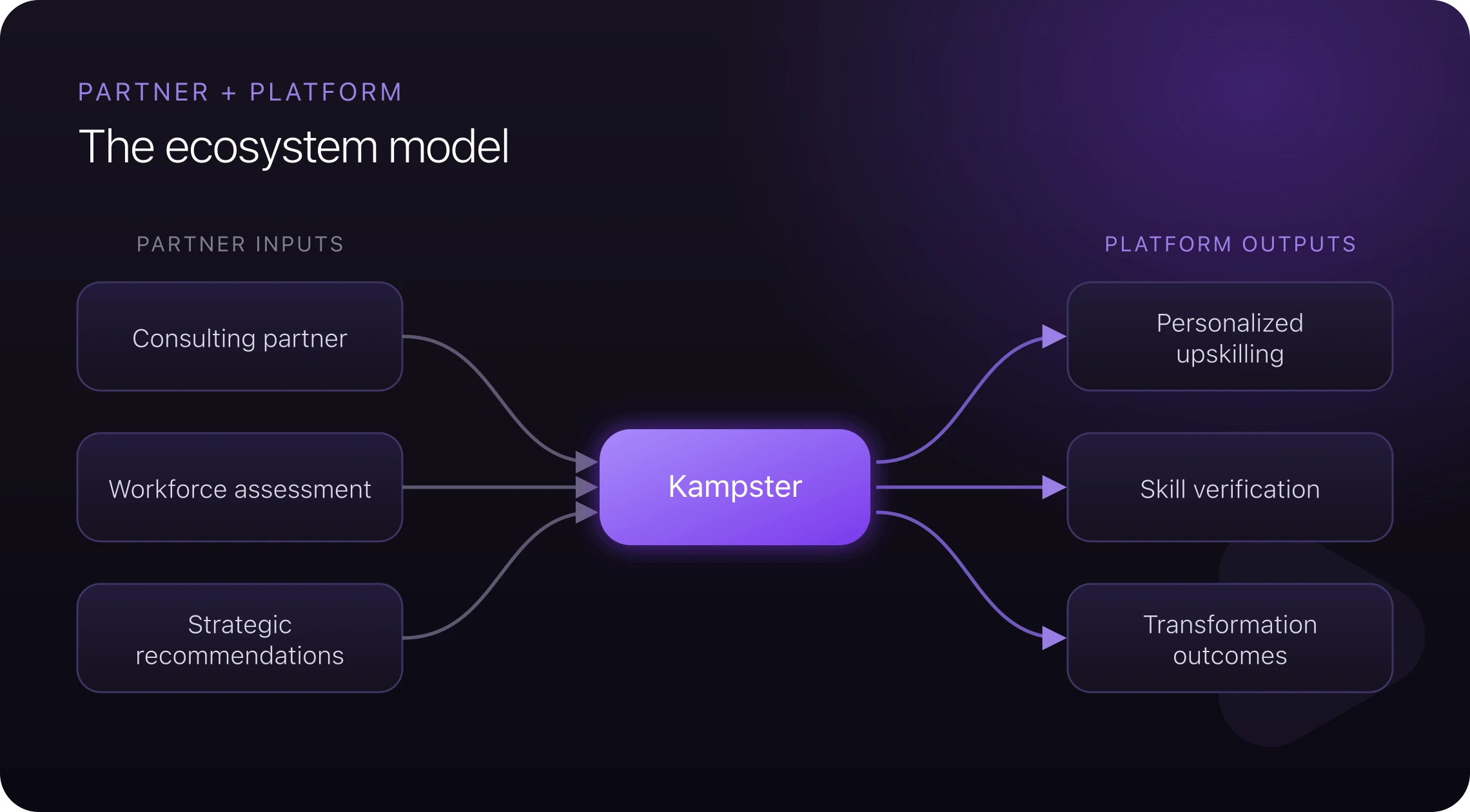
Why this model benefits partners
The Capability Transformation Ecosystem creates value in multiple ways.
Consulting firms gain:
- new diagnostic capabilities
- stronger data-driven recommendations
- recurring revenue opportunities
- measurable client outcomes
Implementation partners gain:
- higher adoption rates
- stronger project success metrics
- additional service offerings
- improved client retention
Clients gain:
- better transformation outcomes
- measurable capability development
- reduced implementation risk
- faster workforce readiness
The future of professional services
The next decade will redefine consulting and implementation services. The firms that thrive will not be those that deliver the most recommendations. They will be those that create the most measurable capability.
Clients increasingly care less about reports and more about outcomes. They want evidence that people can perform differently after transformation. This requires a new model — one that connects assessment, insight, implementation, learning, and verification, and that transforms strategy into capability.
Conclusion
Technology alone does not create transformation. Strategies alone do not create transformation. People create transformation.
The future of consulting and implementation lies in helping organizations develop the capabilities required to succeed in a rapidly changing world. The Capability Transformation Ecosystem represents a new approach to this challenge. By combining workforce diagnostics, strategic expertise, technology implementation, personalized learning, and capability verification, consulting firms and implementation partners can move beyond recommendations and become long-term transformation partners.
In the AI era, competitive advantage will belong not to organizations with the best technology. It will belong to organizations with the strongest capability to use it. That is the opportunity this ecosystem was designed to unlock.