What Happens When an AI Platform Sits at the Table With Leading Education Researchers?
At the M-CTRAS 2025 conference at Johannes Kepler University in Linz, Kampster AI presented its methodology not as another EdTech product, but as part of the scientific conversation about how people actually learn.

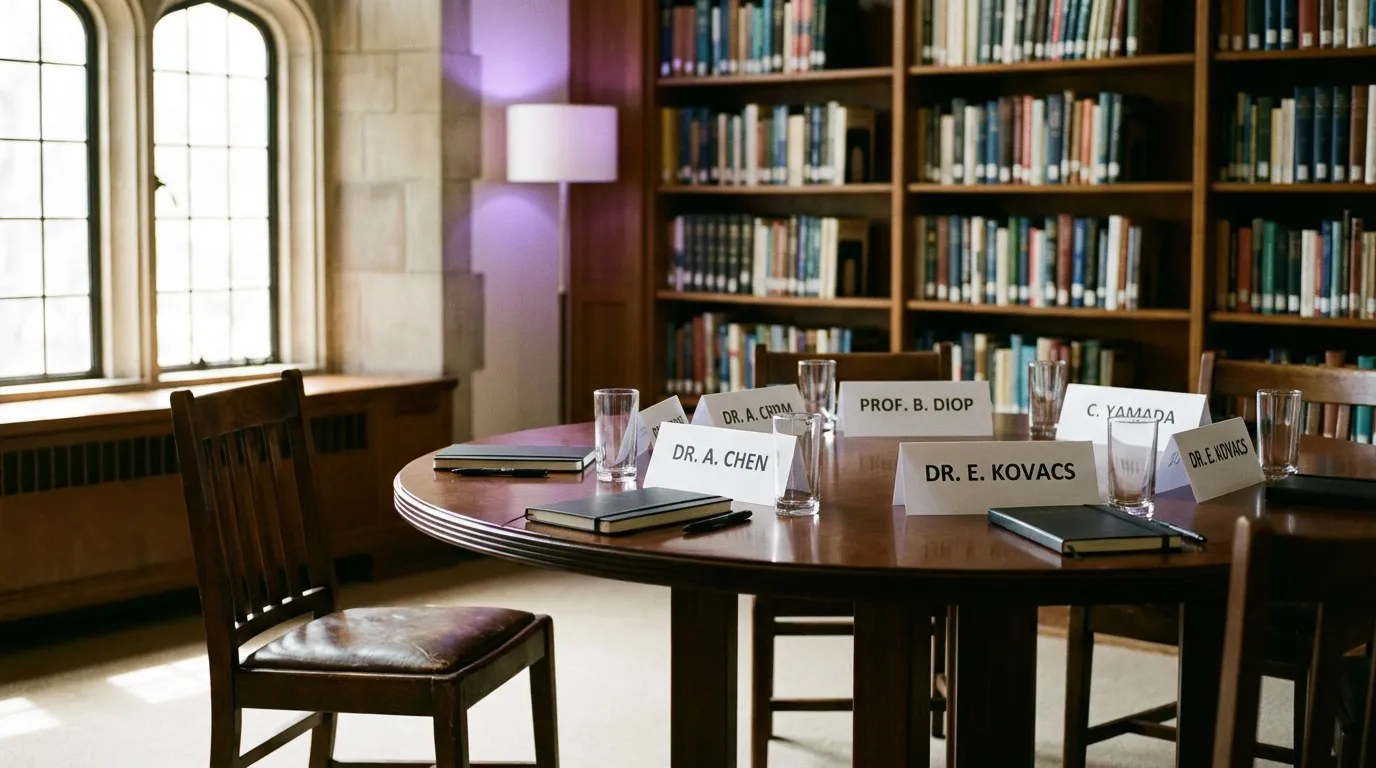
How a decade of digital-learning experience — and more than 700,000 users — earned Kampster AI a place in the scientific program at Johannes Kepler University in Linz.
Not a tech expo — a scientific conference
At the end of June 2025, Kampster AI took part in the M-CTRAS 2025 conference — Mathematics Classroom Teaching Research for All Students — at Johannes Kepler University in Linz, Austria. At first glance it may look like just another conference appearance. For us, it represented something much more significant.
Most AI companies showcase their innovations at technology expos, startup events, or business conferences. M-CTRAS is a very different kind of gathering. Jointly organized by Johannes Kepler University Linz and the University of the Philippines Open University, it is an international scientific conference dedicated to research on mathematics education and classroom learning. This is not a place where companies compete over features, funding rounds, or user numbers. It is where researchers discuss how people actually learn, how competencies are developed, and how educational research can shape the future of teaching.
That is precisely why it was such an honor for Kampster AI to present its methodology as part of the conference's official scientific program.
Part of the academic conversation
This year's theme — "Inspiring Research on Mathematics Classroom Resources" — brought together researchers from around the world. Over three days, the conference featured more than 70 presentations and poster sessions from scholars representing Israel, Türkiye, Indonesia, Taiwan, the Philippines, Italy, Romania, Tanzania, Spain, and many other countries.
Within this highly academic environment, Kampster AI delivered a presentation titled "Innovative AI-Driven Online Learning Model: The Case of the Kampster Platform." What made the experience particularly meaningful was the company we kept. During the same session, researchers presented studies on AI in teacher education, STEAM approaches to mathematics, computational thinking, mathematical creativity, and innovative teaching methodologies. Kampster was not presented as another EdTech product — it became part of a broader academic conversation about the future of learning. That distinction matters.
The methodology, not the features
Rather than focusing on product features or the latest AI capabilities, we presented the methodology behind the new generation of Kampster AI — a platform built on more than a decade of experience in digital learning and insights gained from serving more than 700,000 users through the original Kampster.
Throughout that journey, we reached a conclusion that fundamentally changed the direction of our company. For years, most digital learning platforms have tried to solve one central challenge: motivation.
- Gamification
- Badges and points
- Rewards and leaderboards
- Notifications
All designed to keep learners engaged for longer. Yet our experience, supported by contemporary research in behavioral psychology and learning science, suggests that while motivation is important for initiating learning, it is rarely sufficient for sustaining long-term capability development.
Motivation is temporary. Habits are sustainable.
This realization became the foundation of the new Kampster AI methodology. Instead of constantly trying to motivate learners, Kampster AI is designed to help people build micro-habits of learning — small, consistent daily actions that gradually become automatic behaviors. Powered by AI tutors, personalized learning journeys, continuous competency assessment, and adaptive learning, the platform is not designed to maximize course completions. Its purpose is to help people become more capable every single day. That shift — from managing learning to developing human capability — was the central idea behind our presentation.
Where science and industry meet
Presenting these concepts in an academic environment was particularly valuable. Conferences such as M-CTRAS bring together researchers who dedicate their careers to understanding how people learn, solve problems, develop mathematical thinking, and build competencies. Engaging with this community connects practical industry experience with cutting-edge scientific research, and opens new directions for future collaboration.
The conference in Linz was not an isolated event. Immediately afterward, the same university hosted the EdTech Talents Summit, a European Union-funded initiative focused on strengthening collaboration between universities, researchers, and educational technology companies across Europe. Participating in both events during the same week was especially meaningful: it let us engage with researchers studying the science of learning while also collaborating with the innovators building the technologies that will shape the future of education.
We believe the next generation of educational innovation will emerge at the intersection of these two worlds — not from academia alone, not from industry alone, but through collaboration between both.
The real challenge
That is why participating in M-CTRAS was far more than another conference presentation. It was an opportunity to contribute to an international conversation about how artificial intelligence is transforming learning — and how the future of education will be defined not simply by access to information, but by the ability to develop lasting human capabilities.
In a world where knowledge is becoming universally accessible through AI, the greatest challenge is no longer helping people find information. The real challenge is helping them transform that knowledge into sustainable capabilities. We believe that is where the future of education begins — and we are proud that Kampster AI has the opportunity to be part of that conversation.